


Unique and Handmade Knives
The perfect gift for yourself or a loved one
Tetogi Recommends


Best knives on the market
Through good contact and close cooperation with our suppliers and knife makers in Japan, we have managed to bring the sharpest selection of handmade kitchen knives home to our shop in Rødovre Centre.
We take great pride in having knives for every taste and budget. So whether you are looking for an affordable and reliable everyday knife, or the most excellent and exclusive of handmade knives, we certainly have something for you
Popular


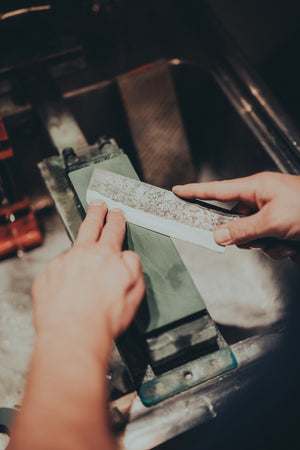
We sharpen your knives
We have specialized in being able to sharpen all types of kitchen knives and we can pride ourselves on being the best on the market for the task. We work gently and always choose a sharpening method that best suits your knife
Sharpening Supplies


Let customers speak for us
En fin og informativ betjening af en meget entusiastisk og vidende mand. Kniven skærer fantastisk og er utrolig smuk i sin kombination af råhed og finesse.

Excellent knife and service! Thank you so much!

Good tool for the kitchen. Thin material so very good with for example pancakes etc 😀 Also very good costumer service :)

really holds edge great geometry


Den gør sgu livet lettere i køkkenet

Always great service from the team at Tetogi😊 And delivery is super fast.
Truly world-class craftsmanship, and a stunning knife.


Mega fed kniv, og rigtig fin til prisen.
Kæmpe anbefaling.


Visit our store in Rødovre Centre
In our shop and showroom, you can see, feel and try all the knives before you make a decision.
We guide you through with expert guidance, so we ensure that you come home with the right knife for you
Frequently Asked Questions
What is the difference between Japanese and Western kitchen knives?
Japanese kitchen knives are typically thinner, harder and sharper than Western knives. It provides higher precision and better cutting performance, but also requires proper use and maintenance.
Do you offer professional knife sharpening?
Yes, Tetogi offers professional knife sharpening, where we sharpen with respect for the knife's geometry and steel type. Read more on our grinding page or contact us directly.
Prices:
"Ordinary" knives: DKK 70 per pieces.
Japanese knives: DKK 100 per pieces
Why are many of Tetogi's knives often out of stock?
Many of our knives are sold out because they are produced in very limited quantities by Japanese blacksmiths who work by hand and not industrially. Each knife requires time, experience and precision, and production cannot therefore be scaled quickly.
In addition, we only select knives that meet our high standards for sharpness, balance, materials and finish, which means that we would rather wait for the right quality than compromise. The combination of limited production, high demand and genuine Japanese craftsmanship mean that many models sell out quickly.
We recommend signing up for our newsletter or following the page Just In, where we continuously launch new deliveries.
How do I maintain my Japanese kitchen knife?
We recommend:
Hand wash and dry after use
Using Japanese whetstones for Sharpening
Avoid the dishwasher and hard cutting boards such as bamboo or titanium.
Correct maintenance significantly extends the life of the knife.
How do I contact Tetogi?
You can contact us via our contact widget, e-mail (Info@tetogi.com) or by visiting us physically if you want to experience the knives in hand and get personal guidance.
How do I choose my first Japanese knife?
When choosing your first Japanese knife, we recommend a versatile knife type such as Gyuto or Santoku, as they cover most tasks in the kitchen. Choose stainless steel, which requires less maintenance, and a length around 180–210 mm for good balance and control.
The most important thing is that the knife feels comfortable in the hand. At Tetogi, we are happy to help you find the right Japanese kitchen knife for your level and needs.
Blog

Nov 12, 2025
How to take care of your carbon knife
Read more

Nov 12, 2025
The ultimate guide to choosing your first Japanese knife
Read more