Skip to content
Free shipping on all orders over DKK 2,000
Sold Out Carbon steel Ebony Shop 180mm

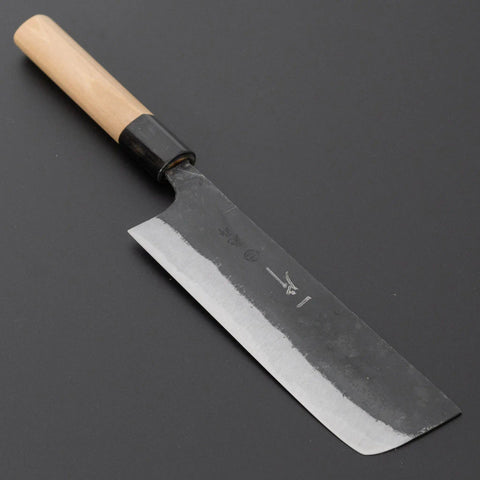
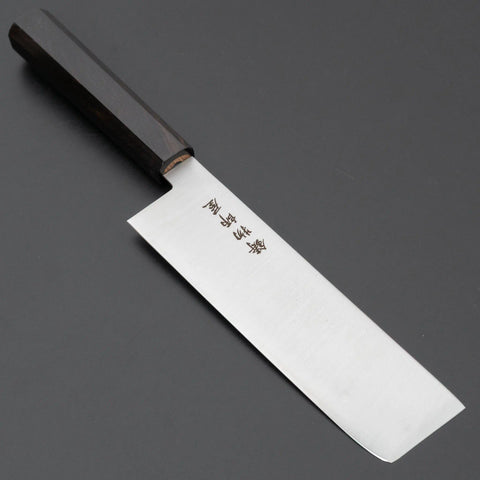
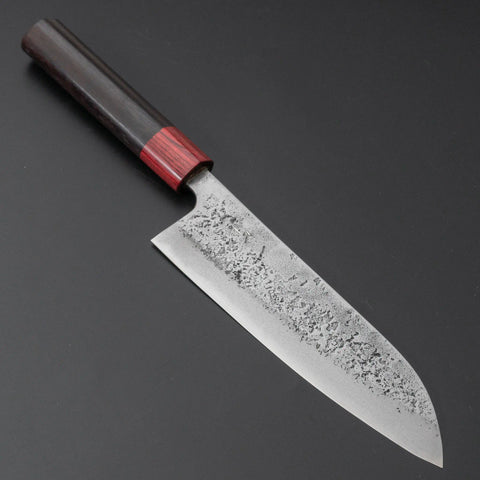
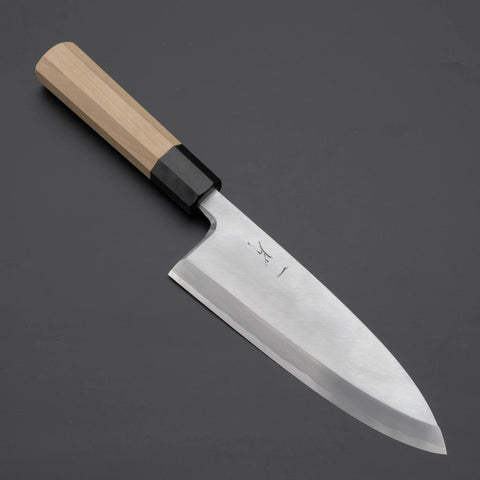
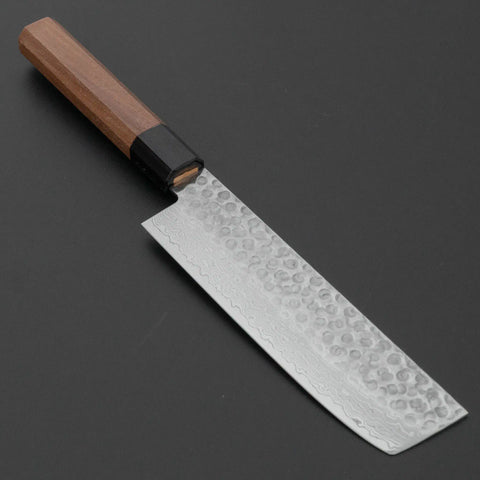
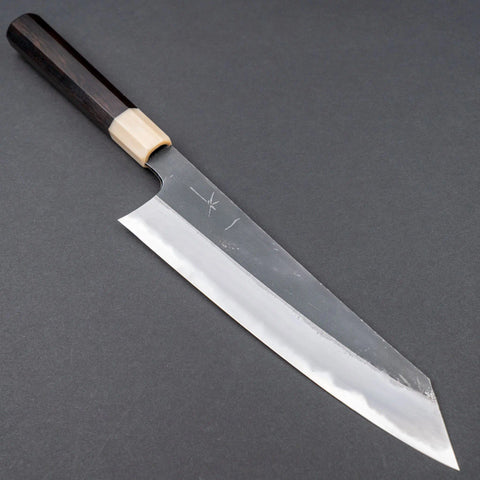
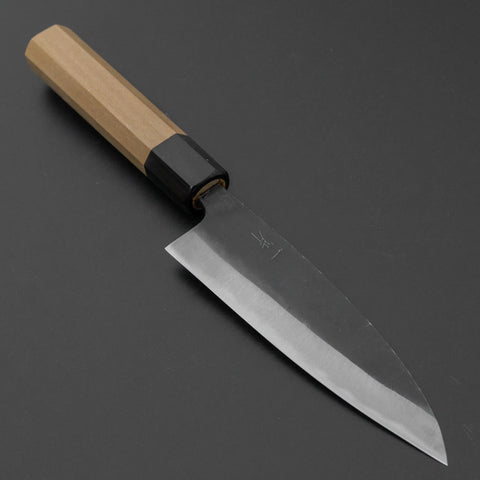
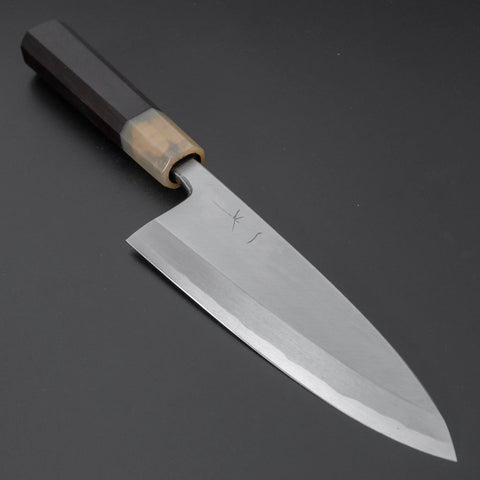
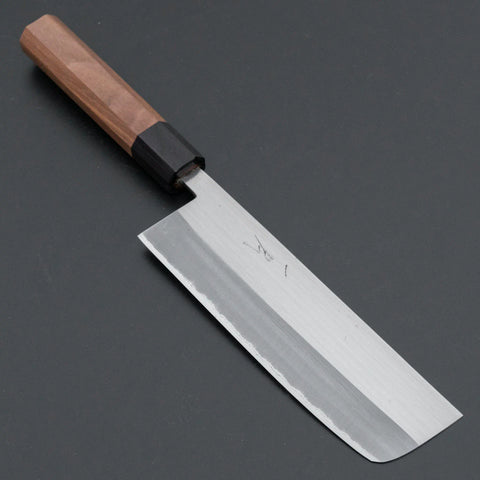
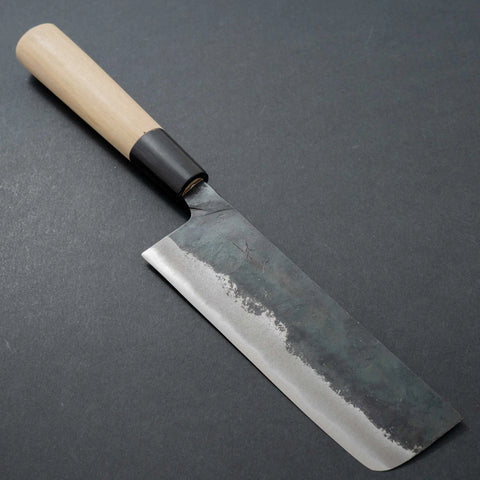
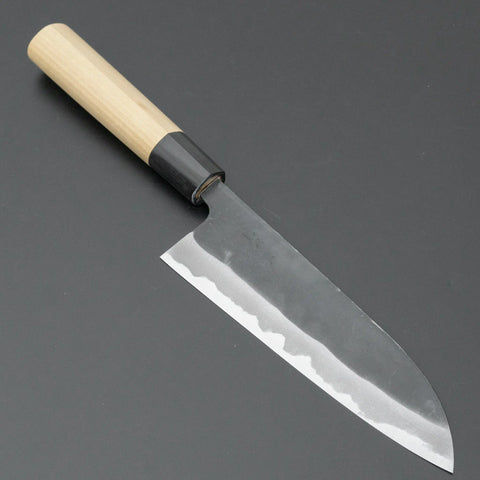
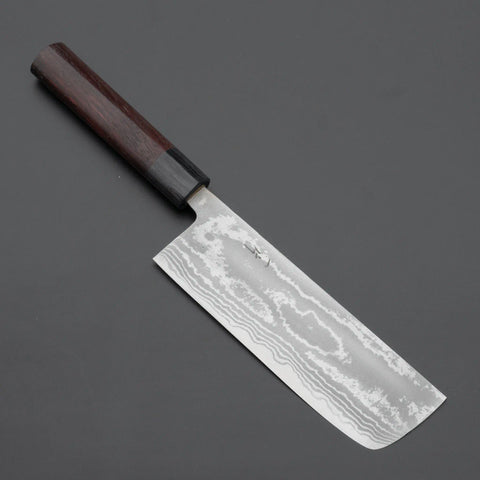
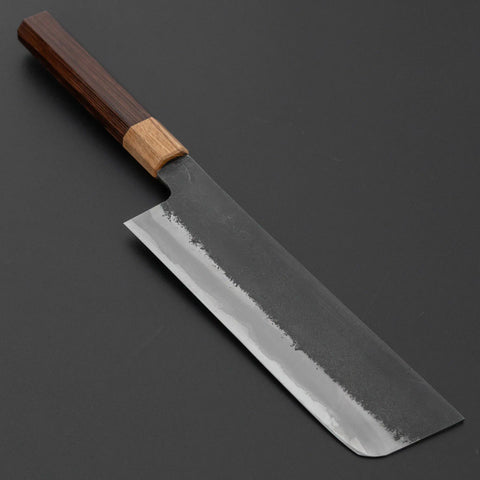
Hitohira Hinode Nashiji White #2 Stainless Clad Santoku

Price: $253.00
Add-ons for this knife done before dispatch
+ $12.00
+ $31.00
Pairs perfectly with add-on
+ $46.00
+ $37.00

Description

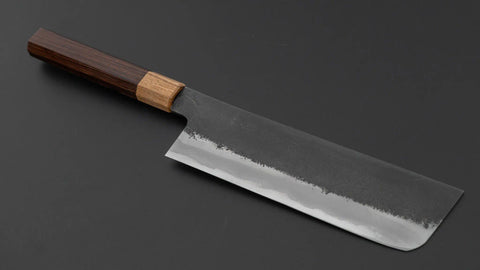
Hand forged and honed in Niigata Japan by highly respected blacksmith Mutsumi Hinoura.

The knife is built with a hard core of shirogami #2, surrounded by a soft layer of stainless steel on each side.

The core of the knife in shirogami 2 (white#2), stands out for its purity and thereby ability to be sharpened extremely sharp. The knife edge is formed ultra fine and the thin profile of the blade ensures an extraordinary cutting ability.

Due to the purity of the core steel, a relatively quick patination with use must also be expected. The beautiful blue patina gives the knife charm and character, but it also forms a protective film against further oxidation of the surface.

It is recommended that the knife be dried directly after use and the dishwasher is of course a no-go.

The steel is hard and it is therefore not recommended to cut hard objects such as cartilage, bones and frozen goods.

What does Nakiri mean

Nakiriknife is ideal for preparing vegetables, as its flat blade and symmetrical profile allow the chef to make uniform and precise cuts. This knife is perfect for chopping, slicing and dicing vegetables for a wide variety of dishes. With its versatility and sharpness, the Nakiri is an indispensable part of any kitchen that emphasizes the freshness and presentation of vegetables.

More about Carbon steel

Carbon steel is the classic Japanese knife steel. It can be hardened hard, can get a very sharp egg and is usually easy to grind up again. The most well-known types are Shirogami (white steel) and Aogami (blue steel).

Carbon steel contains little or no chromium, so it reacts with moisture and acid. The steel acquires a greyish to dark patina over time, and it can rust if it is left wet. Many of our carbon knives have a core of carbon steel in a sheath of stainless steel or soft iron. With a stainless shell, only the exposed core along the egg needs extra care. With an iron sheath, this applies to the entire blade.

Care & maintenance

Rinse and dry the knife thoroughly immediately after use, and never leave it in water. Never put it in the dishwasher. Wipe the blade when you are cutting, for example, citrus, tomato or onion. If the knife is to lie unused for a while, give the blade a thin layer of camellia oil. Patina is completely normal and not a defect. Use a wooden or plastic cutting board, not glass, stone or marble. Store the knife on a magnetic strip, in a knife block or in a saya so that the egg does not hit other things. Keep it sharp on a wet stone, and feel free to wipe it off on a leather strap in between.

Currently sold out

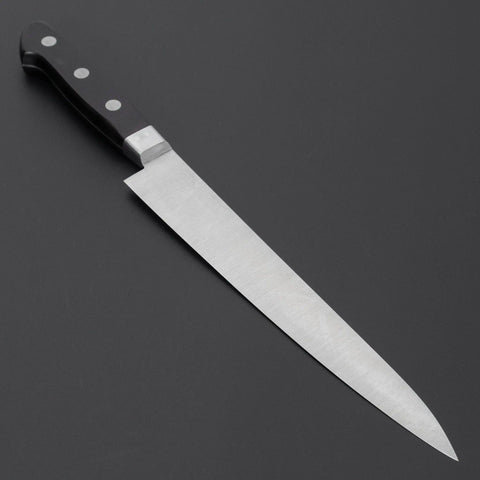
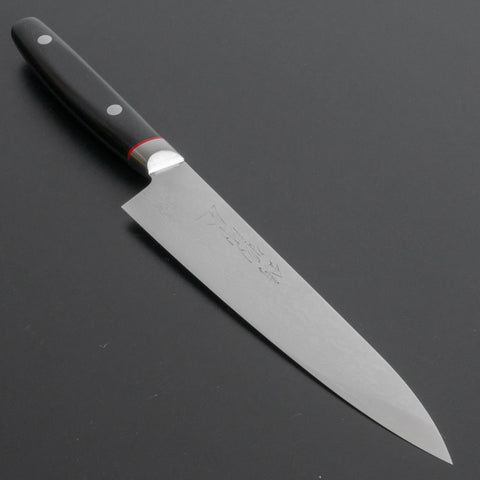
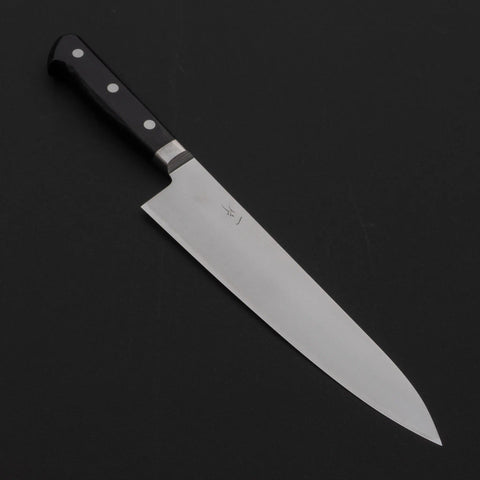
We have 19 other nakiri knives

This blade is hand-forged in a small batch and rarely comes back in the same version. The same knife type — nakiri — is in stock in several variants, prepared and sharpened in Denmark.

See all Nakiri See all Nakiri
Closest alternativesSame type · in stock

Specifications

Detailed specifications

All measurements are taken on the actual blade — hand-forged knives vary slightly from piece to piece.

Brand Hitohira
Place of origin Sanjo-Niigata/ Japan
Profile Nakiri
Steel type Carbon steel
Steel Shirogami #2 (White Carbon Steel)
Blade length 175 mm
Overall length 335 mm
Blade height at heel 56 mm
Spine thickness 2,6 mm
Weight 211 g
Handle Ebony & Buffalo Horn Ferrule Octagonal
Inspiration

Hitohira series