


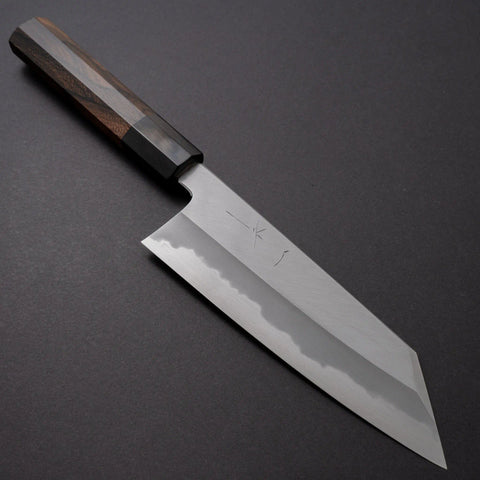

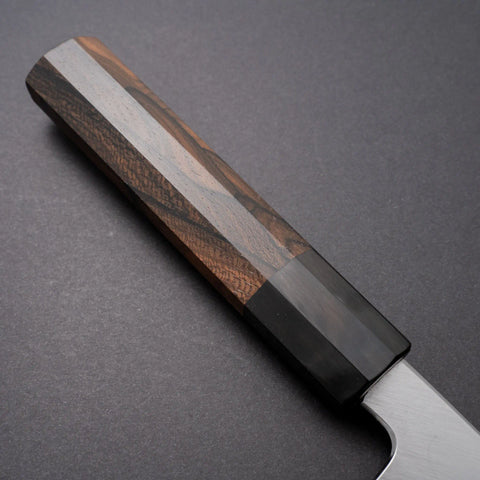


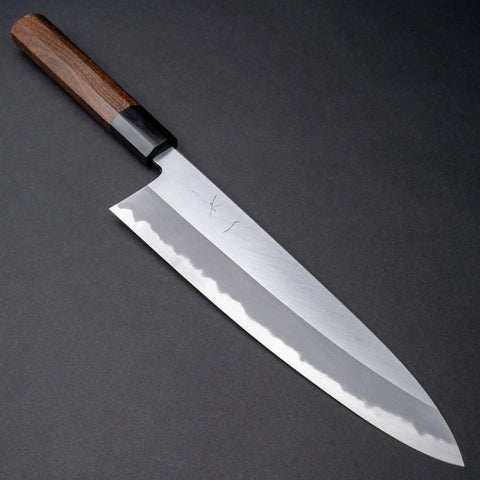
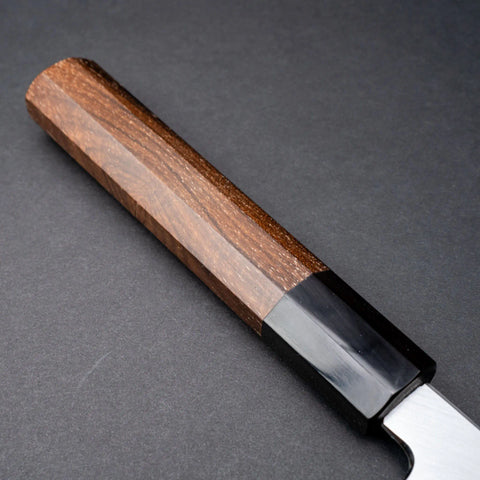
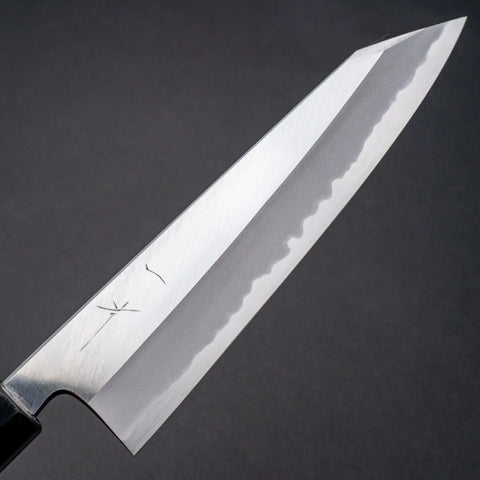
Hitohira Tanaka Kyuzo Blue #1 Migaki Bunka Ziricote Handle


Description
Description
Sharpener: Kyuzo
Kyuzo's father Heihachi is one of the busiest sharpeners in Sakai. Heihachi's workshop room and corridor were always filled with knives waiting to be sharpened. Although Kyuzo initially worked under his father to learn the foundation of rough sharpening, eventually he became a student of Kambei, known as one of the best sharpeners in Sakai because he knew best how to sharpen wide double bevel knives. After a few years of training, he built his style based on both his father and Kambei's respective styles. Today, Kyuzo is one of only a few people who can sharpen wide double bevel with really good Shinogi-line in Sakai, one of the most challenging techniques in sharpening.
Detailed Spec
Brand: Hitohira ひとひら (一个)
Smith: Tanaka Blacksmith 田中打刃物製件所
Producing Area: Sakai-Osaka/ Japan
Profile: Bunka
Steel Type: Carbon Steel
Steel: Yasuki Blue (Aogami) #1, Soft Iron Clad
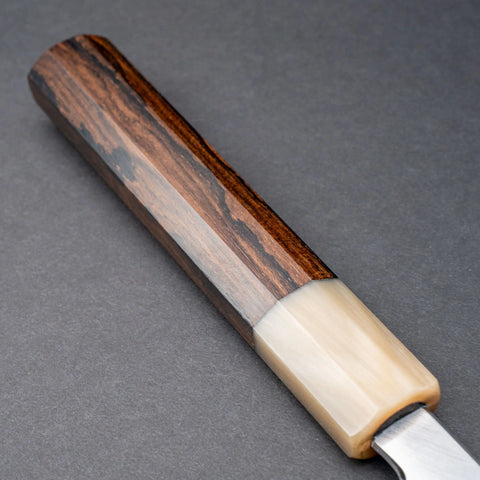
Handle: Ziricote & Buffalo Horn Ferrule Octagonal
Total Length: 325mm
Edge Length: 177mm
Handle to Tip Length: 188mm
Blade Height: 53mm
Thickness: 2mm
Handle Length: 134mm
Weight: 150g
Hand Orientation: Ambidextrous
Sharpener: Kyuzo
What does Bunka mean
What does Bunka mean
More about Carbon steel
More about Carbon steel
Care & maintenance
Care & maintenance
Currently sold out
We have 5 other bunka knives
This blade is hand-forged in a small batch and rarely comes back in the same version. The same knife type — bunka — is in stock in several variants, prepared and sharpened in Denmark.
-
Bunka · Allround knife
Hitohira Imojiya TH Blue Super Bunka Ebony ShopPrice: €188,95 -
Bunka · Allround knife
Muneishi Blue #2 Tsuchime Damascus Bunka 165mm Walnut HandlePrice: €335,95 -
Bunka · Allround knife
Hitohira Imojiya TH Blue Super Bunka Ho Wood HandlePrice: €174,95




Deba · Fish knife
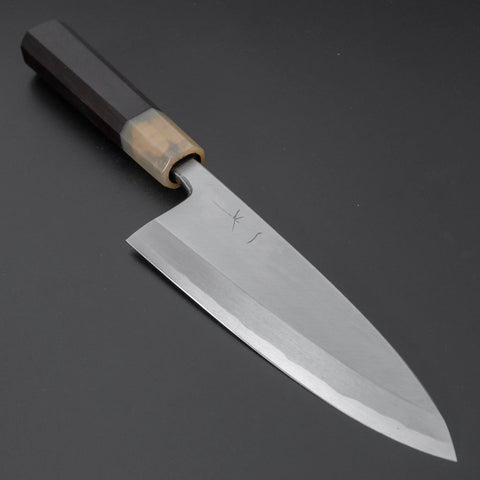
Hitohira Tanaka Manzo White #2 Deba
Carbon steel · Ebony Shop · 165 mm


Bunka · Allround knife
Hitohira Tanaka Kyuzo Blue #1 Migaki Bunka Ziricote Shop
Carbon steel · Ziricote Shop
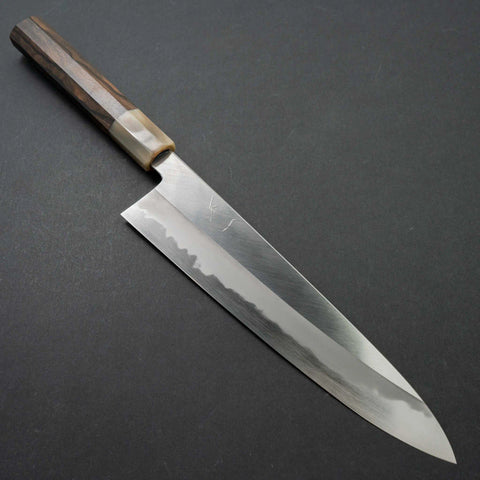

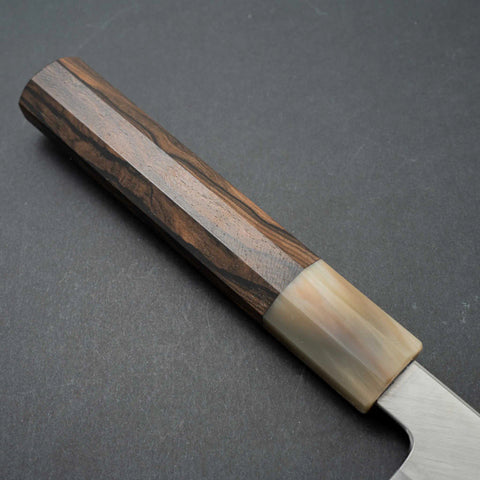

Gyuto · Chef's knife
Hitohira Tanaka Kyuzo Blue #1 Migaki Gyuto
Carbon steel · Ziricote Shop · 240 mm
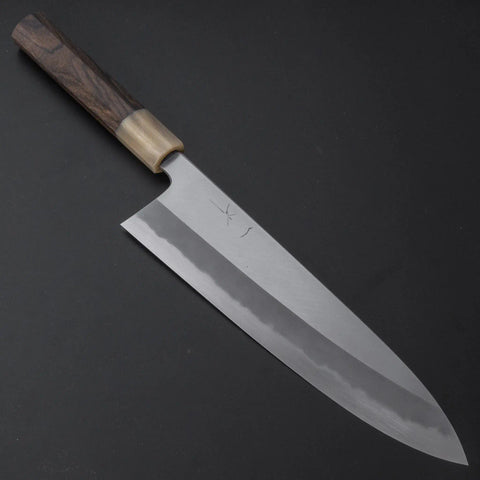

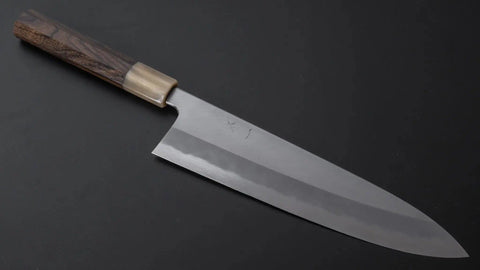

Gyuto · Chef's knife
Hitohira Tanaka Kyuzo Blue #1 Migaki Gyuto
Carbon steel · Ziricote Shop · 240 mm


Gyuto · Chef's knife
Hitohira Tanaka Izo Blue #1 Stainless Clad Gyuto
Carbon steel · Ziricote Shop · 240 mm


Gyuto · Chef's knife
Hitohira Tanaka Kyuzo Blue #1 Migaki Gyuto
Carbon steel · Ziricote Shop · 240 mm



Gyuto · Chef's knife
Hitohira Tanaka Kyuzo Blue #1 Migaki Gyuto
Carbon steel · Ziricote Shop · 210 mm



Kiritsuke Gyuto · Chef's knife
Hitohira Tanaka Kyuzo Blue #1 Migaki Kiritsuke Gyuto
Carbon steel · Ziricote Shop · 195 mm
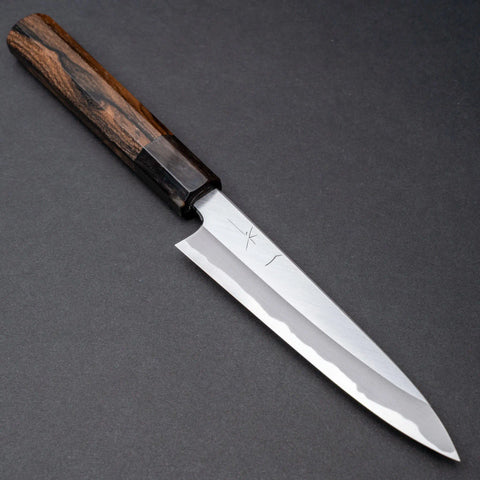

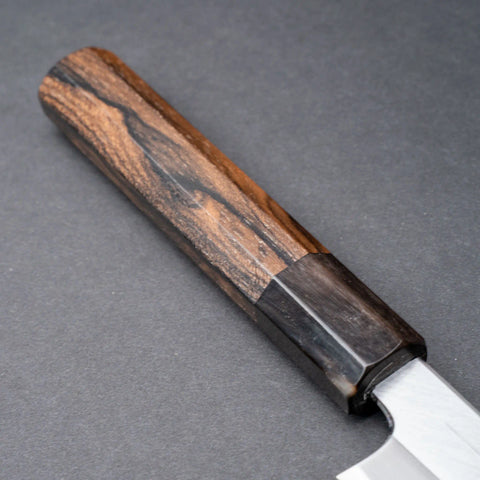

Petty · Universal knife
Hitohira Tanaka Kyuzo Blue #1 Migaki Petty
Carbon steel · Ziricote Shop · 150 mm
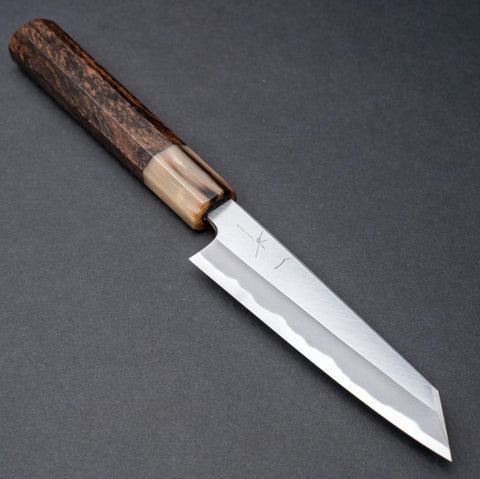

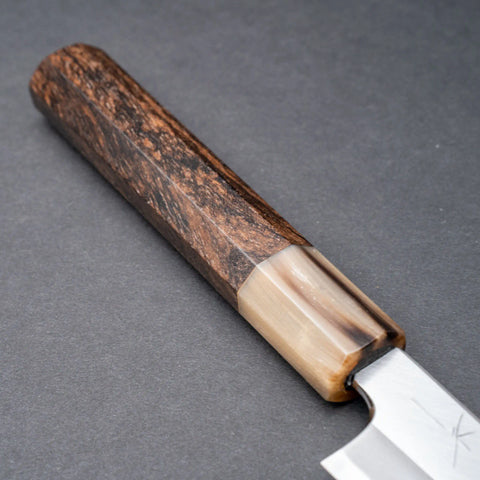

Petty · Universal knife
Hitohira Tanaka Kyuzo Blue #1 Migaki Kiritsuke Petty
Carbon steel · Ziricote Shop · 130 mm
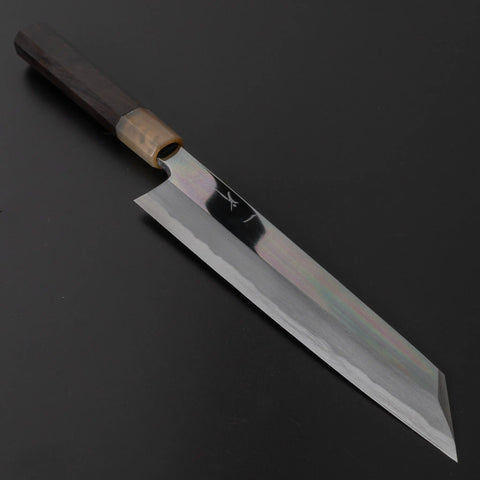


Kiritsuke Yanagiba · Sashimi Knife
Hitohira Tanaka Mosuke Blue #1 Kiritsuke
Carbon steel · Ebony Shop · 240 mm
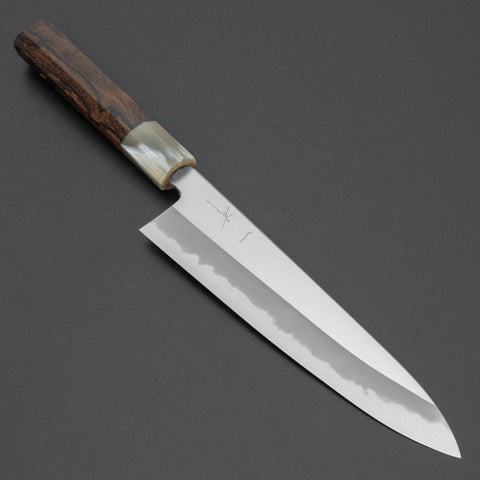


Gyuto · Chef's knife
Hitohira Tanaka Kyuzo Blue #1 Migaki Gyuto
Carbon steel · Taihei Makassar Ebony Handle · 210 mm