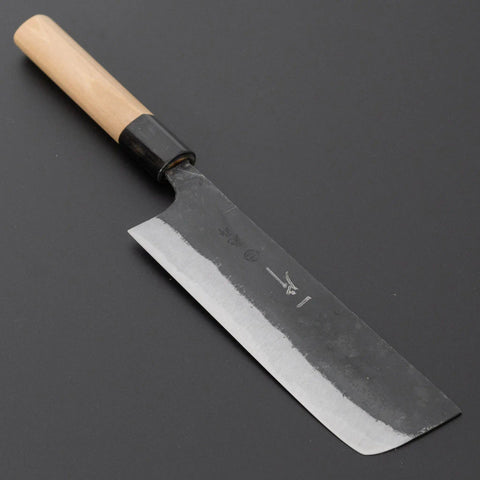
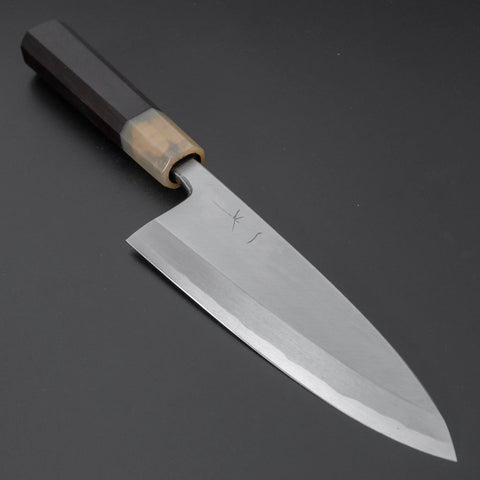
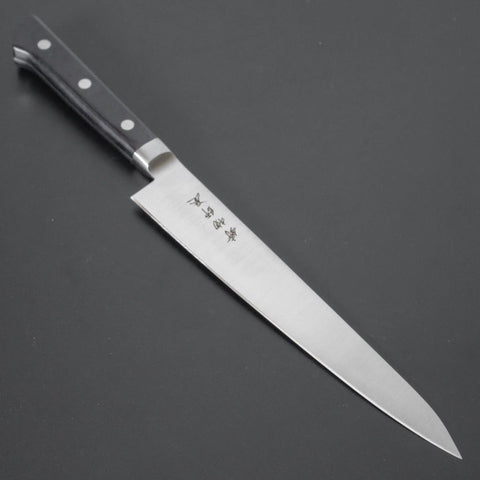
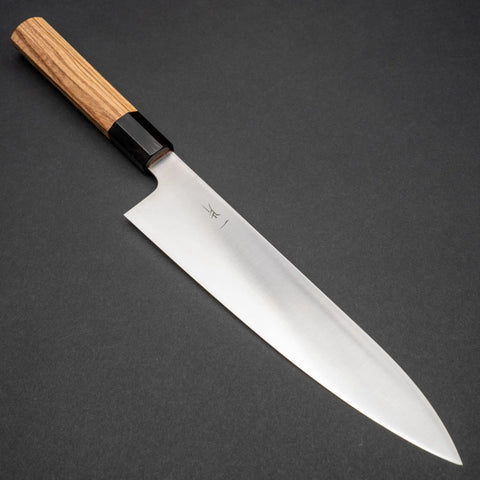
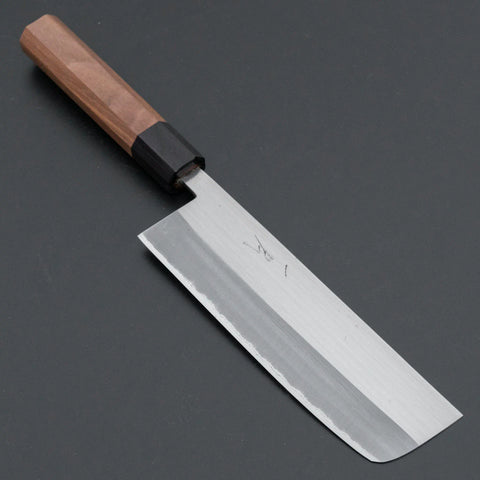
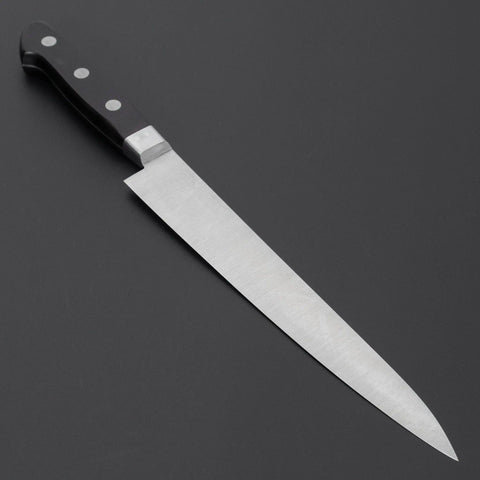
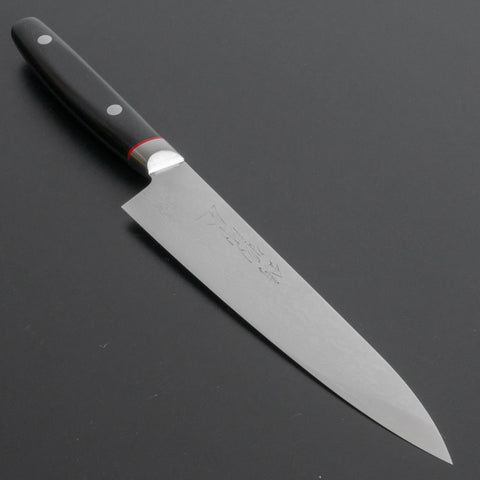
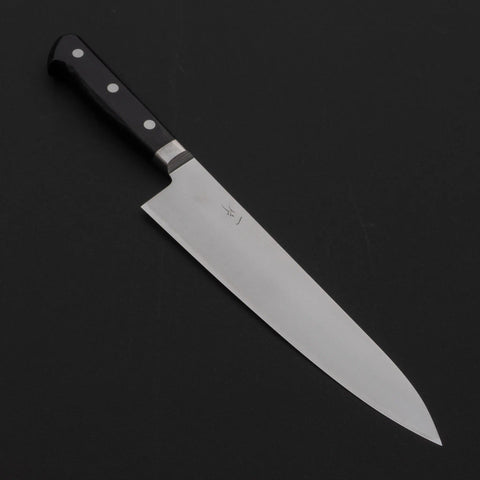
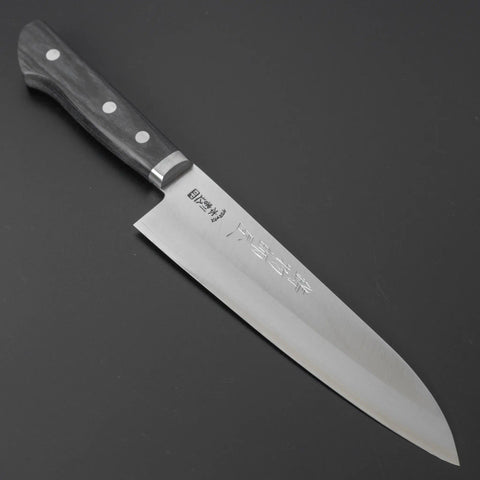
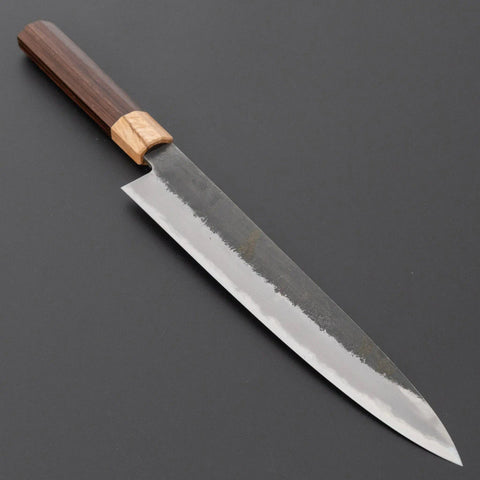
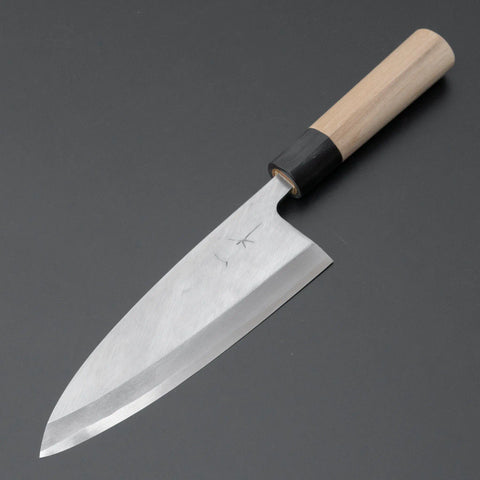
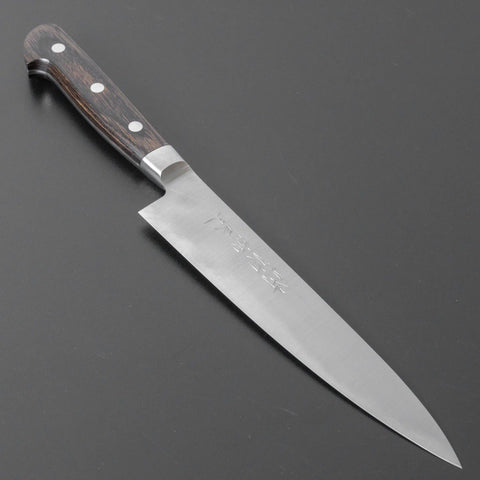
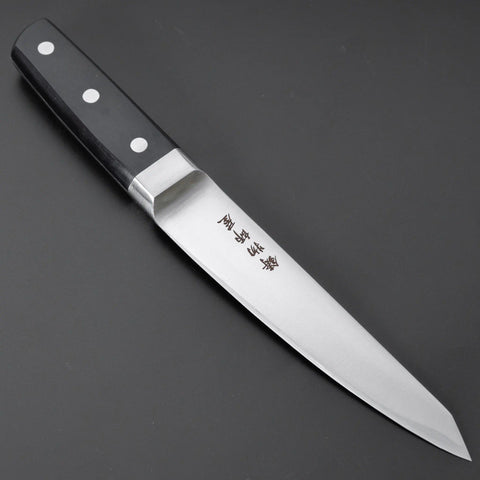
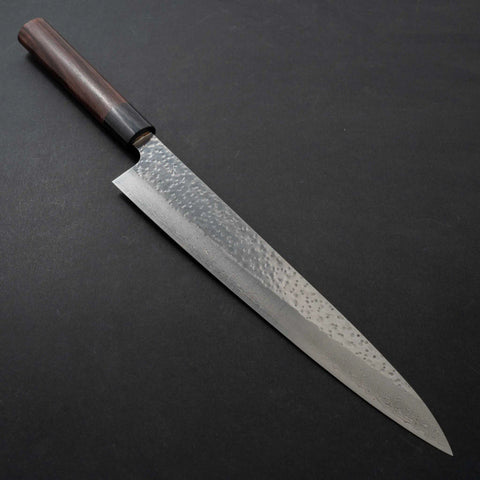
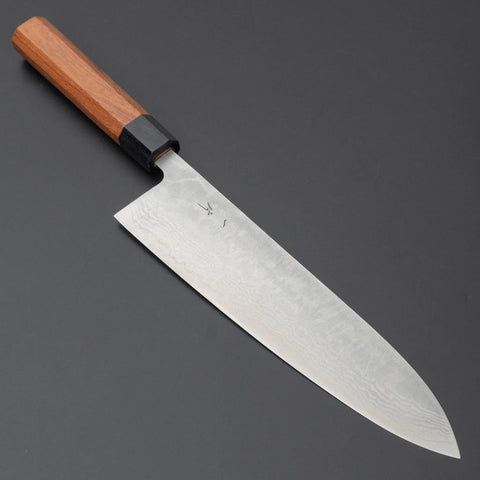
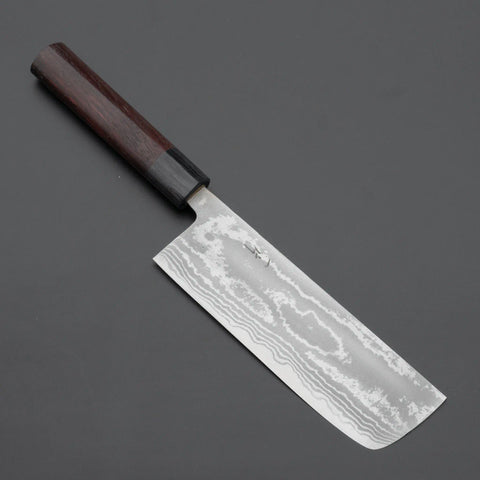
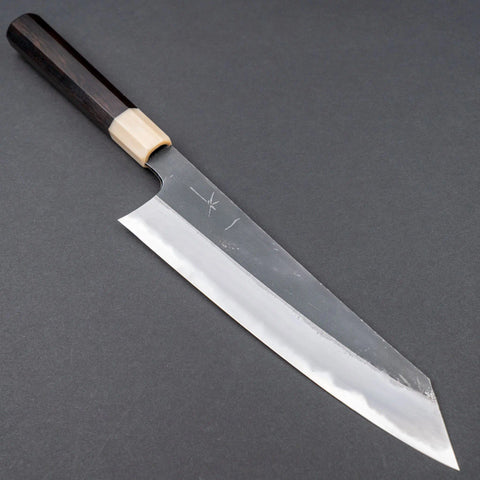
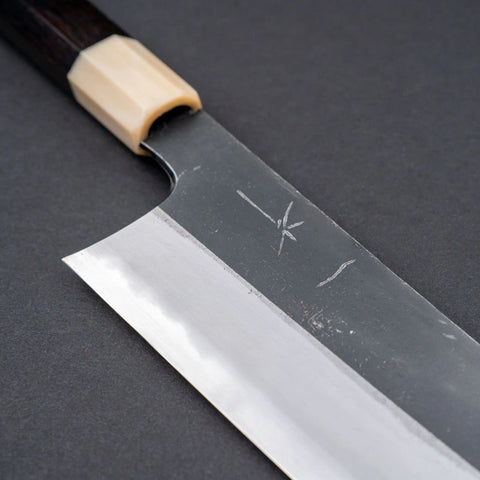
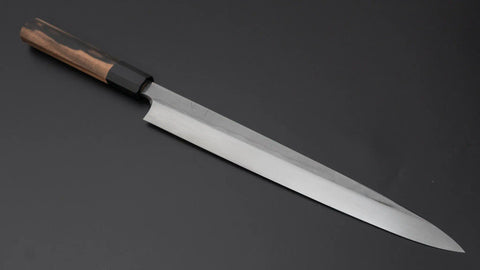
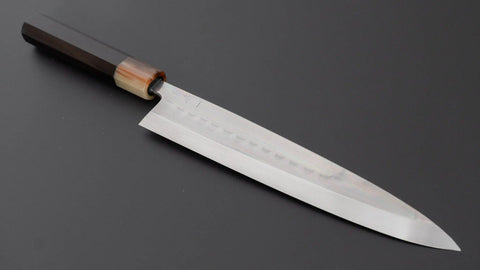
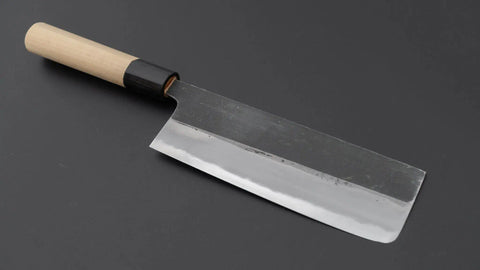
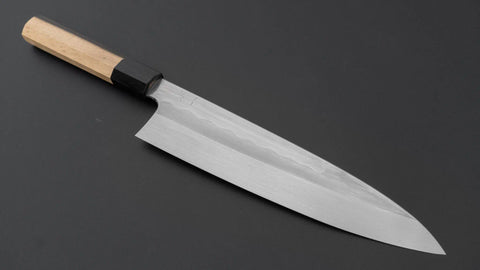
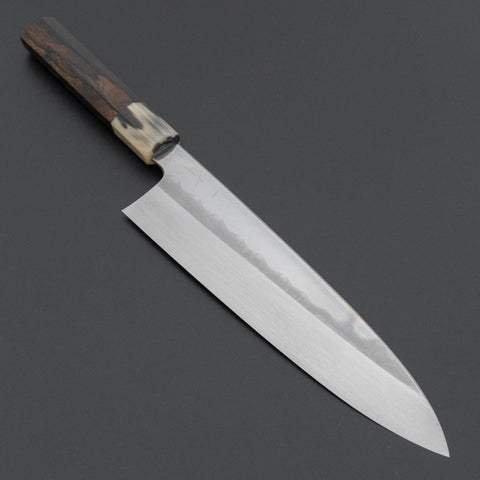
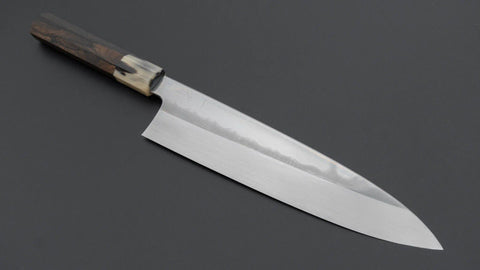
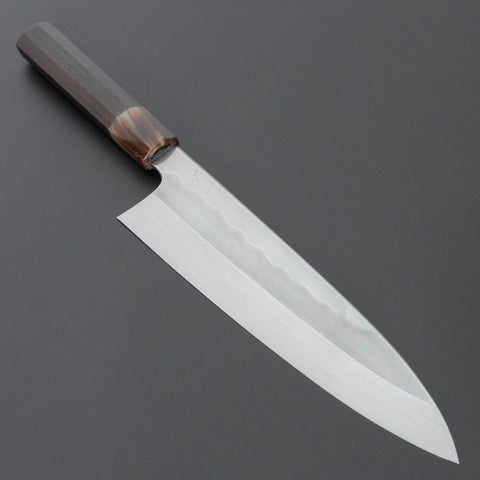
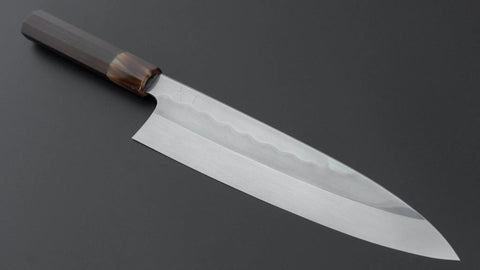
Hitohira Togashi White #1 Stainless Clad Sujihiki
Hvorfor skal man betale for at få sin kniv slebet inden når man køber den? Ofte er knivene skarpe når vi modtager dem, men man kan virkelig løfte skarpheden til et andet niveau, hvis de lige får en tur på slibestenen inden de tages i brug.
Camellia oil (or tsubaki oil as it is also called) is used to protect your carbon knives from rust during storage. The oil is applied in a thin layer.
A leather strap is a good and gentle way to maintain the sharpness of your kitchen knives.
The knife is stroked against the leather 10-20 times, after which you have a super sharp knife again.
The leather is also used as the final deburring and polishing after Sharpening on wet stone.
The leather is mounted on a base, which can stand non-slip on the kitchen table.
Can be used with or without compound.
25.5 X 7.5 cm
Description
Description
Hand forged by master blacksmith Kenji Togashi and then honed to perfection by his son Kenya Togashi.
If you are a chef, a passionate knife geek or just appreciate fantastic craftsmanship, this knife is definitely something for you.
The knife is constructed with two outer layers of stainless steel and with a core of Shirogami #1 (white#1). A combination you don't see often, as it is a big challenge to produce. A delicious combination where you get the ultra sharp and clean egg from Shirogami#1 and the convenience of the two outer layers of stainless.
Due to the purity of the core steel, a relatively quick patination with use is to be expected. It is recommended that the knife be dried directly after use and the dishwasher is of course a no-go.
The steel is hard and it is therefore not recommended to cut hard objects such as cartilage, bones and frozen goods
What does Sujihiki mean
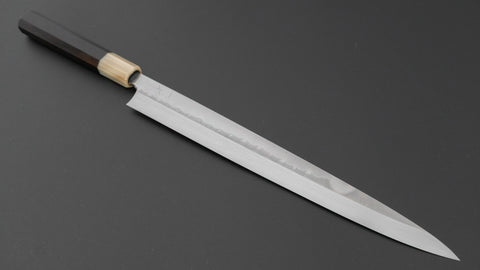
Sujihikiknife is ideal for cutting thin slices of meat, fish or other foods with an even and precise cutting edge. The long, slim blade allows the chef to make long, even cuts, which is perfect for presenting dishes or carving meat for serving. Sujihiki is a favorite among chefs looking for a knife that can deliver both precision and sharpness for cutting meat and fish.
More about Carbon steel
Carbon steel is the classic Japanese knife steel. It can be hardened hard, can get a very sharp egg and is usually easy to grind up again. The most well-known types are Shirogami (white steel) and Aogami (blue steel).
Carbon steel contains little or no chromium, so it reacts with moisture and acid. The steel acquires a greyish to dark patina over time, and it can rust if it is left wet. Many of our carbon knives have a core of carbon steel in a sheath of stainless steel or soft iron. With a stainless shell, only the exposed core along the egg needs extra care. With an iron sheath, this applies to the entire blade.
Care & maintenance
Care & maintenance
Rinse and dry the knife thoroughly immediately after use, and never leave it in water. Never put it in the dishwasher. Wipe the blade when you are cutting, for example, citrus, tomato or onion. If the knife is to lie unused for a while, give the blade a thin layer of camellia oil. Patina is completely normal and not a defect. Use a wooden or plastic cutting board, not glass, stone or marble. Store the knife on a magnetic strip, in a knife block or in a saya so that the egg does not hit other things. Keep it sharp on a wet stone, and feel free to wipe it off on a leather strap in between.
Currently sold out
We have 12 other sujihiki knives
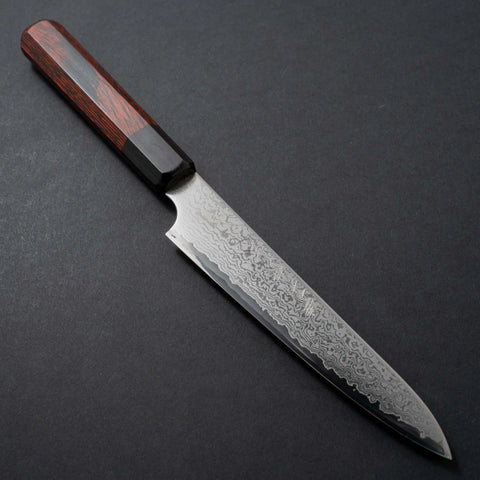
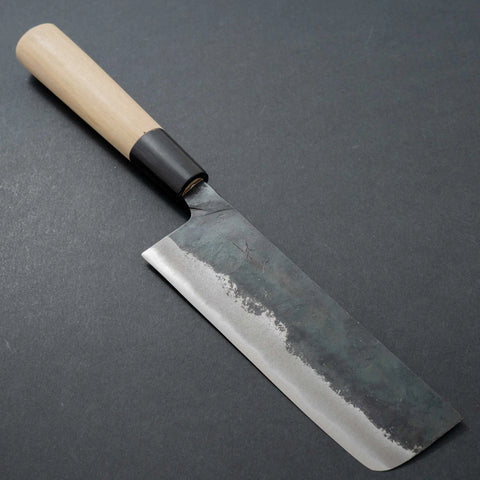
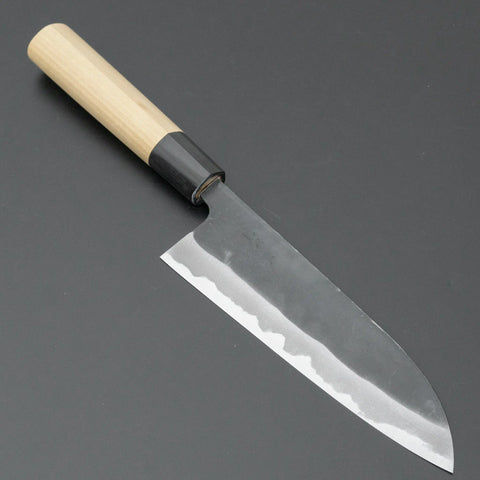
This blade is hand-forged in a small batch and rarely comes back in the same version. The same knife type — sujihiki — is in stock in several variants, prepared and sharpened in Denmark.
-


Sujihiki · Slicing knife
Kogetsu Carbon Sujihiki 300mm Pakka HandleCarbon steel · 229 mm
Price: $541.00 -


Sujihiki · Slicing knife
Blenheim Stainless Clad Slicer 225mmCarbon steel · 225 mm
Price: $385.00 -


Sujihiki · Slicing knife
Hitohira TD Blue #2 Stainless Clad Kurouchi Sujihiki 240mm Walnut HandleCarbon steel
Price: $187.00
Specifications
Detailed specifications
All measurements are taken on the actual blade — hand-forged knives vary slightly from piece to piece.
Kiritsuke Gyuto · Chef's knife
Hitohira Togashi Blue #2 Kurouchi Kiritsuke Gyuto
Carbon steel · Ebony Shop · 240 mm
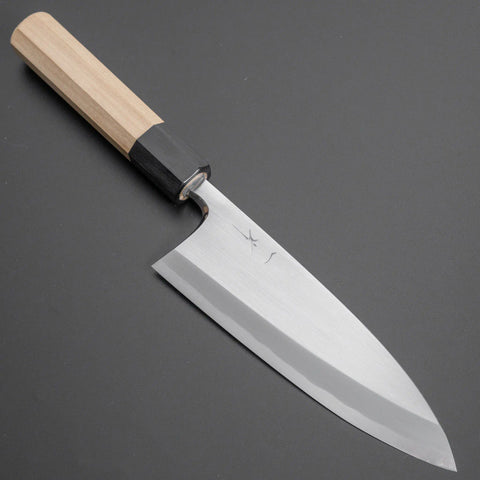
Deba · Fish knife
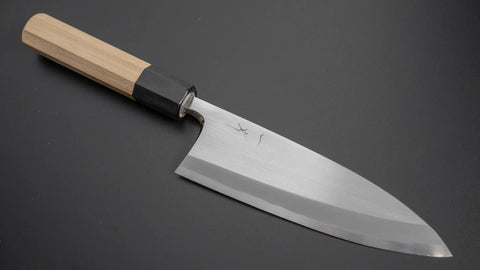
Hitohira Togashi White #1 Tachi Deba
Carbon steel · Ho Wood Handle · 165 mm
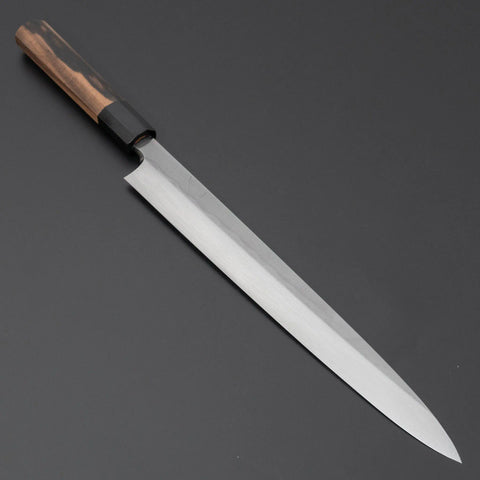
Yanagiba · Sashimi Knife
Hitohira Togashi Blue #1 Tanryumon Mizu Honyaki Yanagiba
Carbon steel · Kurokaki Persimmon Shop · 300 mm
Santoku · Allround knife
Hitohira Togashi White #1 Notaremon Mizu Honyaki Santoku 180mm Taihei Makassar Ebony Handle (#186/ Saya)
Carbon steel · Ziricote Handle · 180 mm
Santoku · Allround knife
Hitohira Togashi White #1 Fuji Mizu Honyaki Santoku 180mm Taihei Makassar Ebony Handle (#183/ Saya)
Carbon steel · Ziricote Handle · 180 mm
Yanagiba · Sashimi Knife
Hitohira Togashi White #2 Mizu Honyaki Fugubiki
Carbon steel · Taihei Ebony Handle · 300 mm
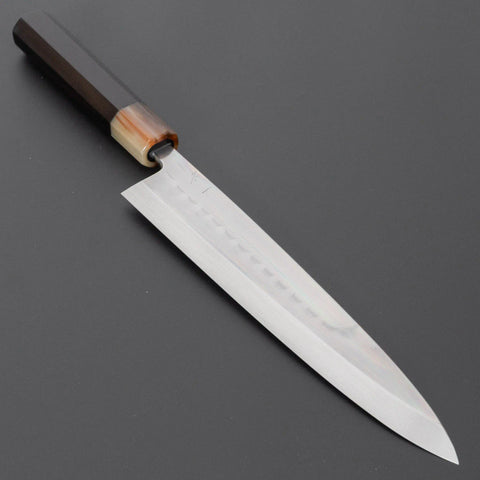
Deba · Fish knife
Hitohira Togashi Blue #1 Tanryumon Mizu Honyaki Yanagiba
Carbon steel · Kurokaki Persimmon Shop · 240 mm
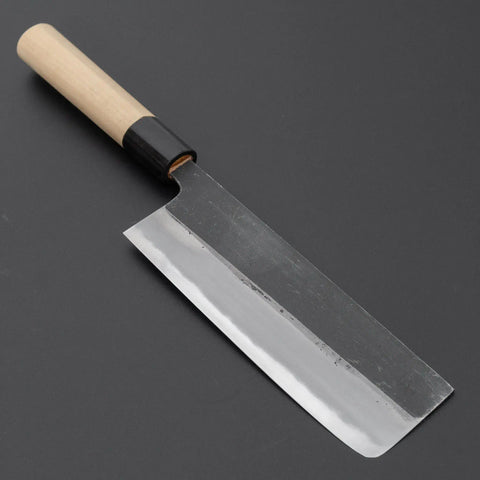
Nakiri · Vegetable knife
Hitohira Togashi White #2 Kurouchi Nakiri Ho Wood Handle (D-Shape)
Carbon steel · Cherry Wood Handle
Gyuto · Chef's knife
Hitohira Togashi White #1 Notaremon Mizu Honyaki Gyuto
Carbon steel · Ziricote Shop · 240 mm
Gyuto · Chef's knife
Hitohira Togashi White #1 Notaremon Mizu Honyaki Gyuto
Carbon steel · Kurokaki Persimmon Shop · 240 mm
Gyuto · Chef's knife
Hitohira Togashi White #1 Notaremon Mizu Honyaki Gyuto
Carbon steel · Ziricote Shop · 240 mm
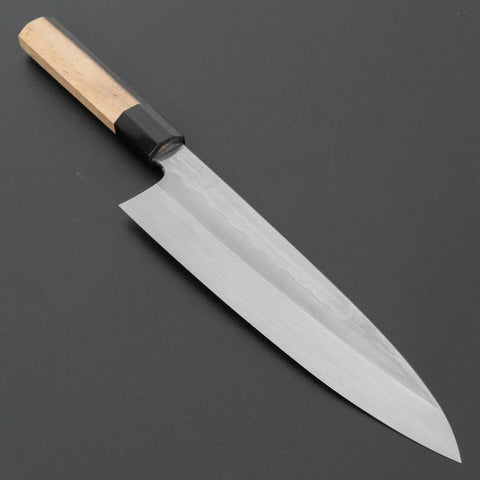
Gyuto · Chef's knife
Hitohira Togashi White #1 Notaremon Mizu Honyaki Gyuto
Carbon steel · Taihei Makassar Ebony Handle · 240 mm