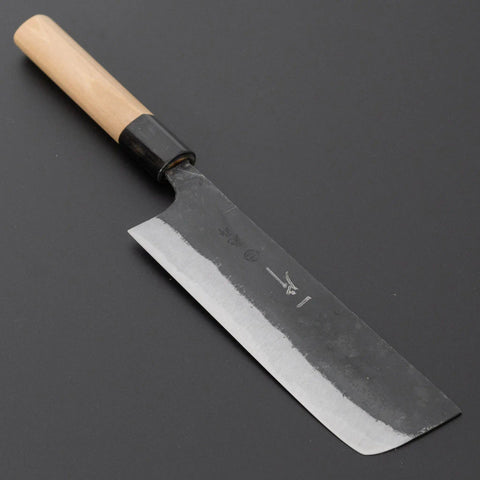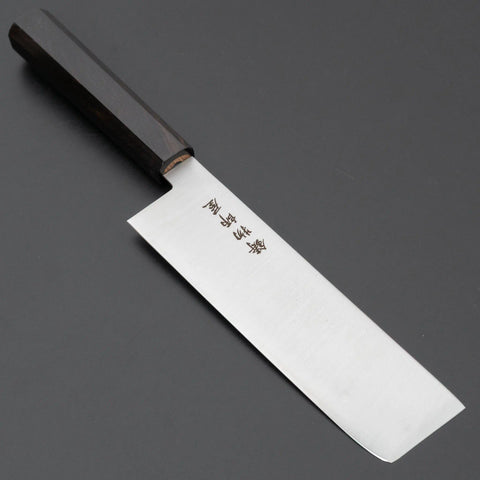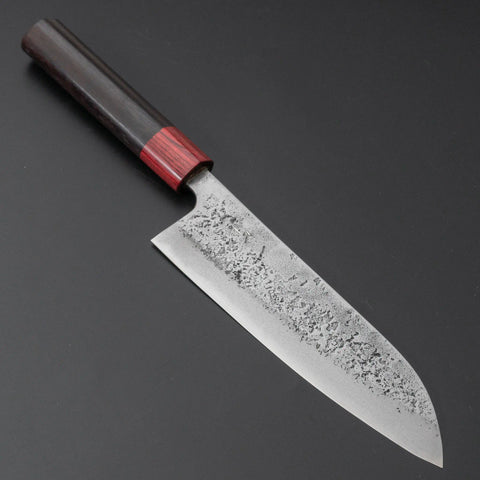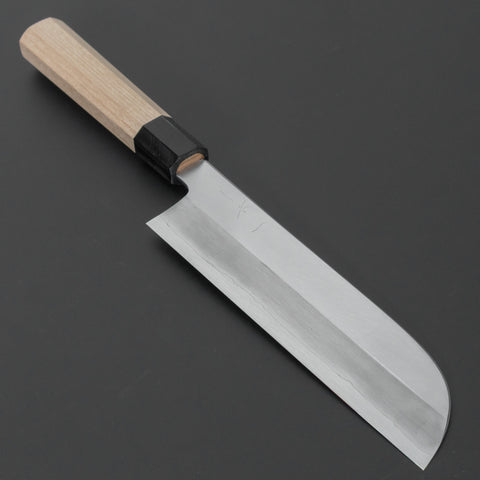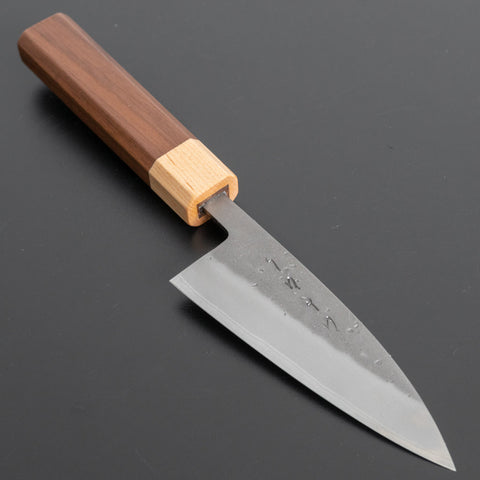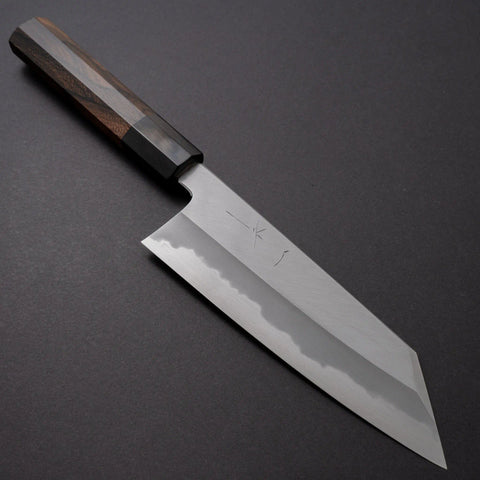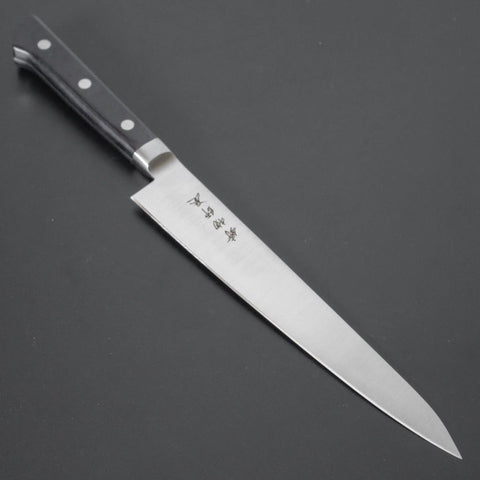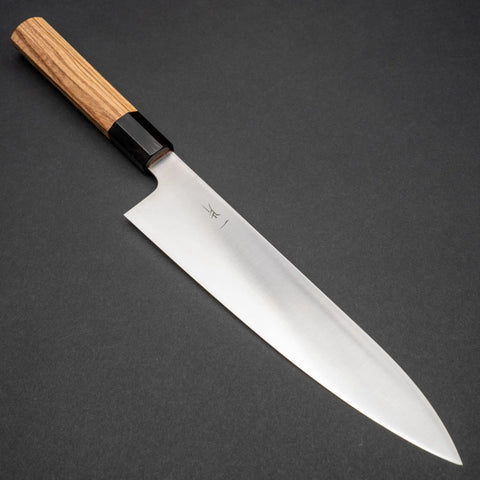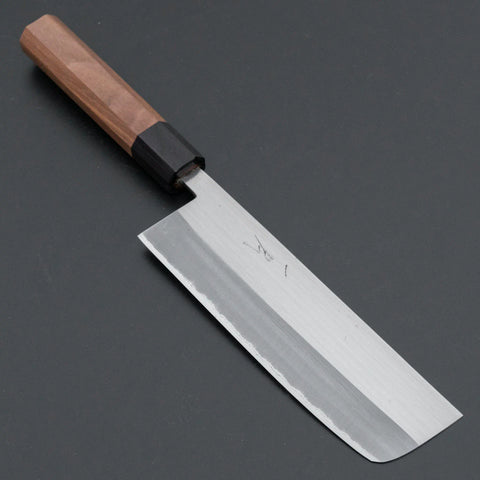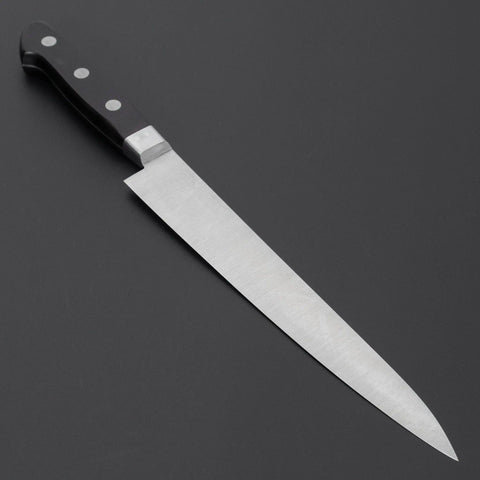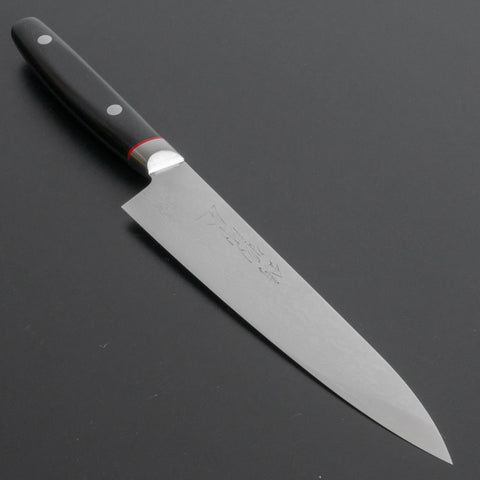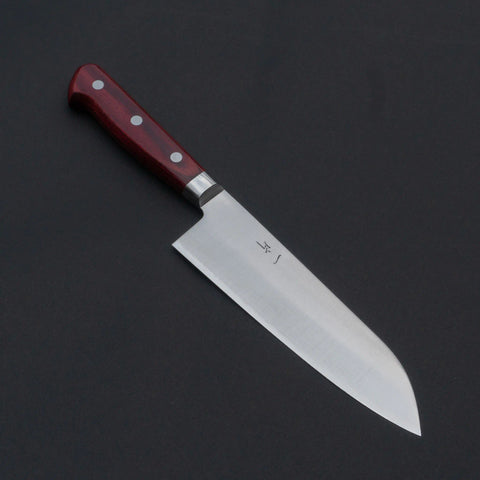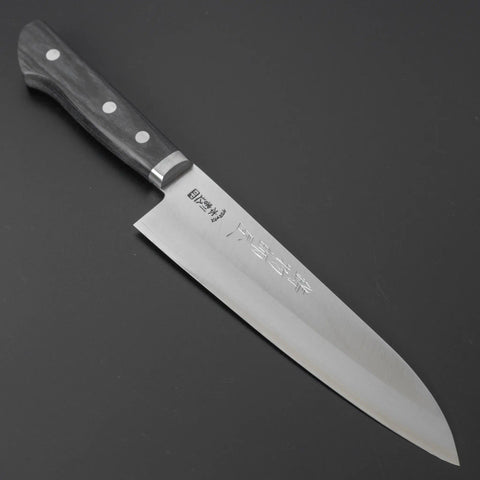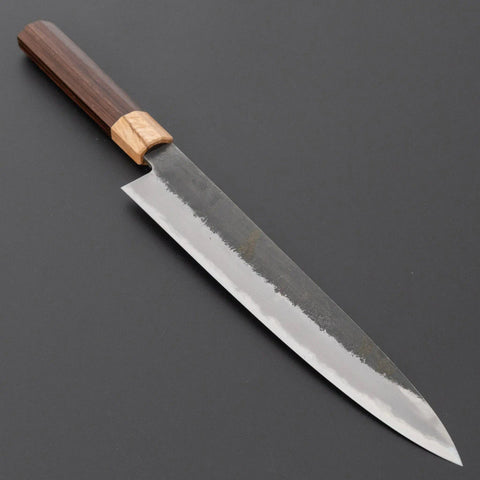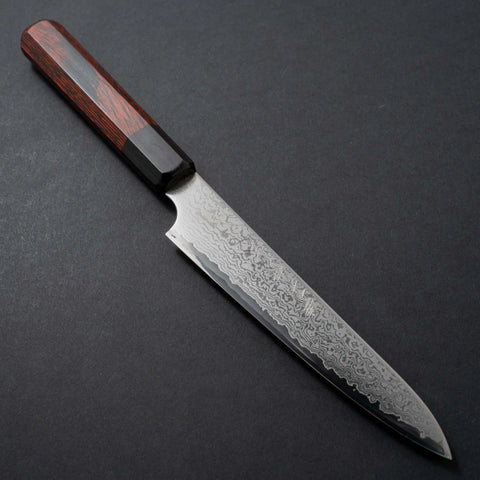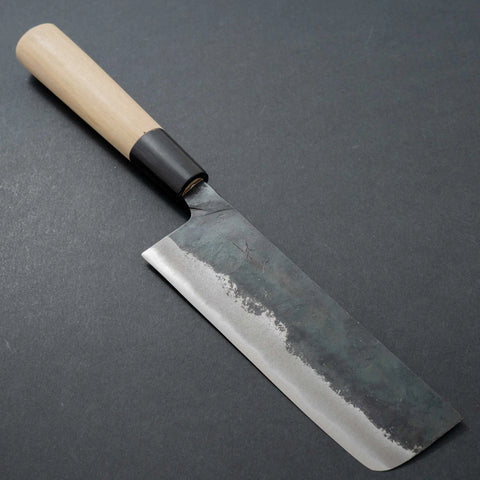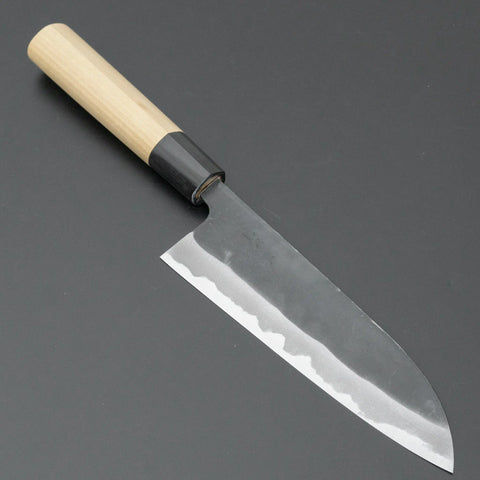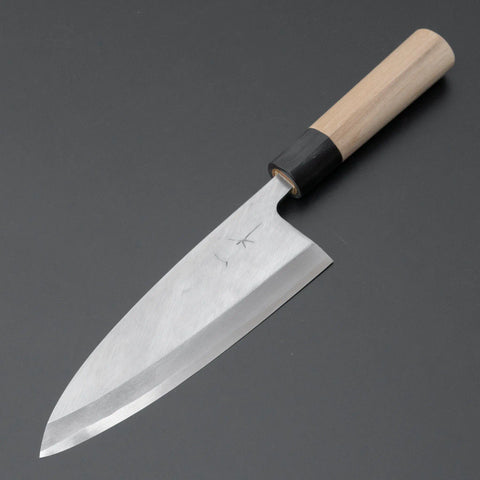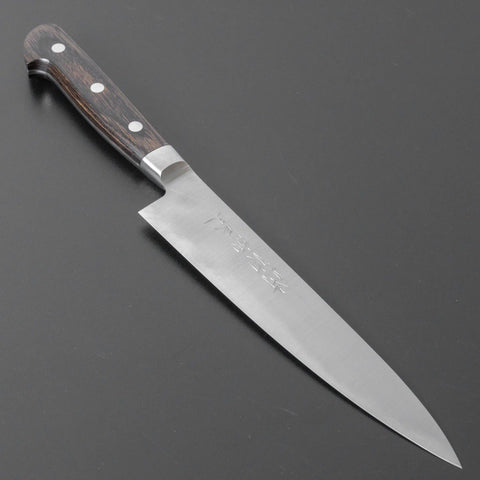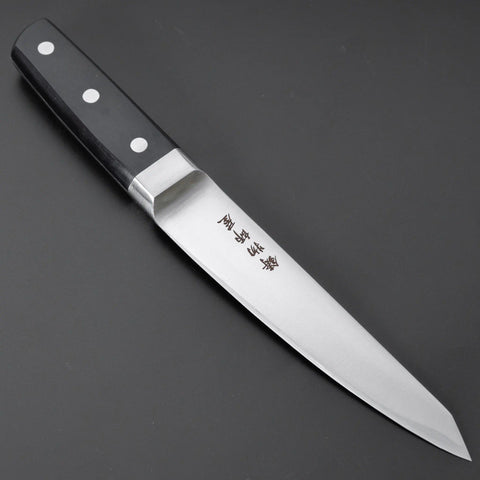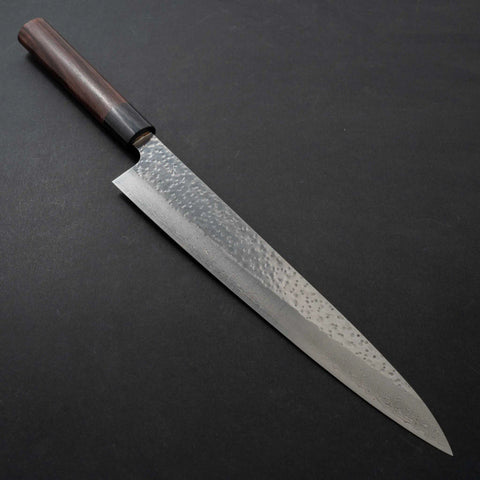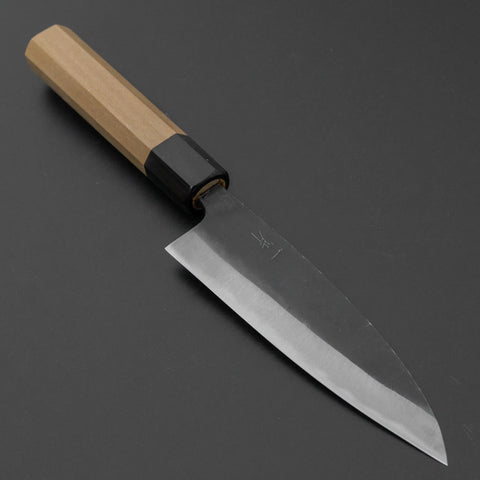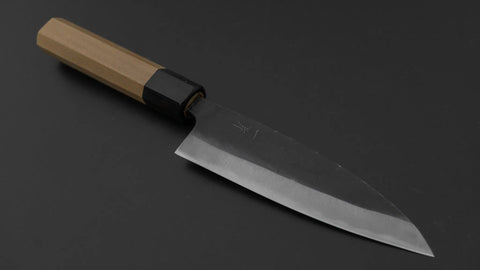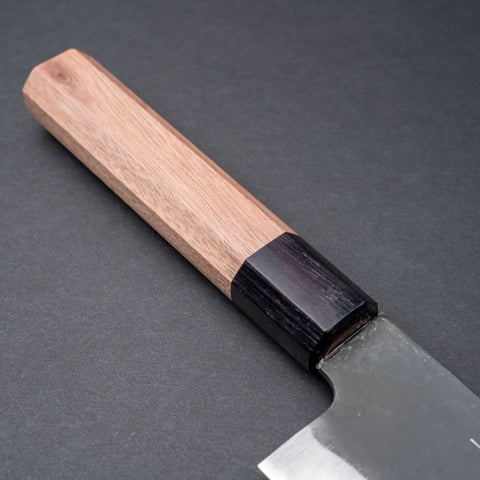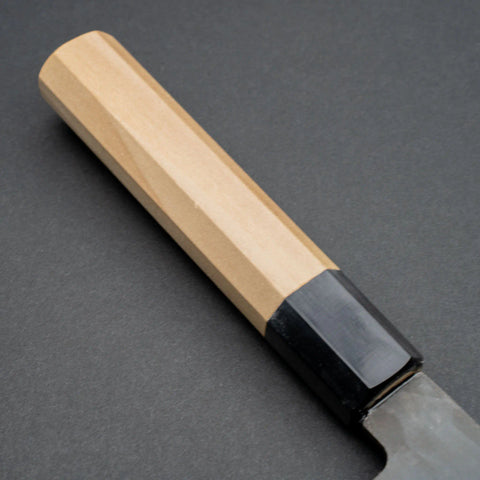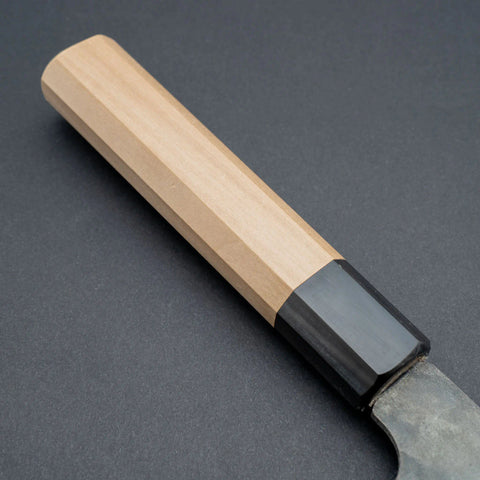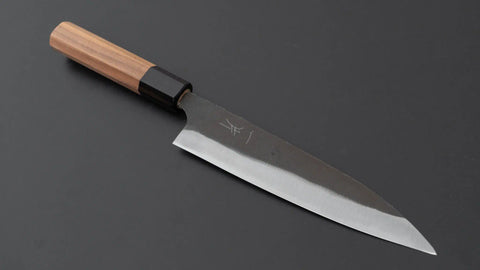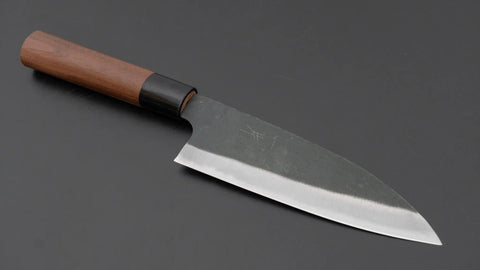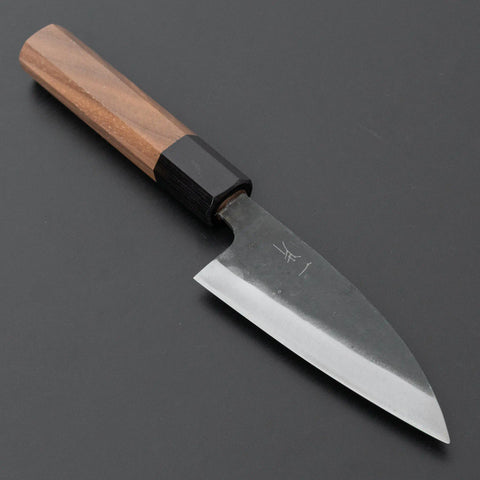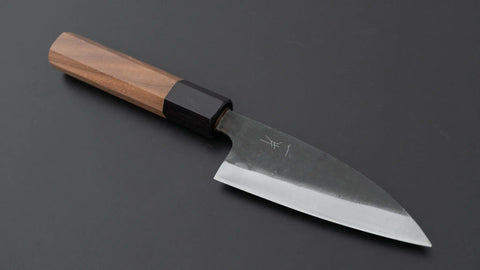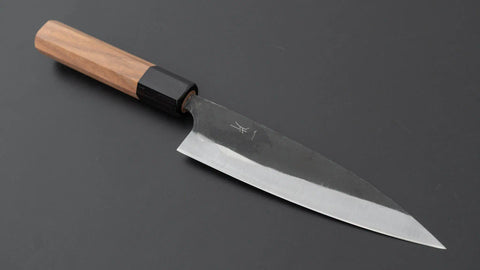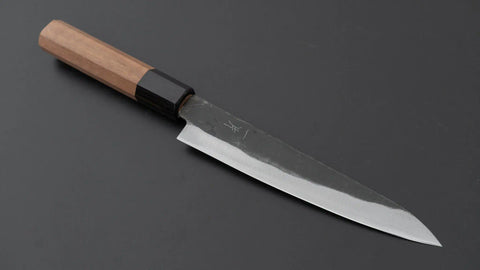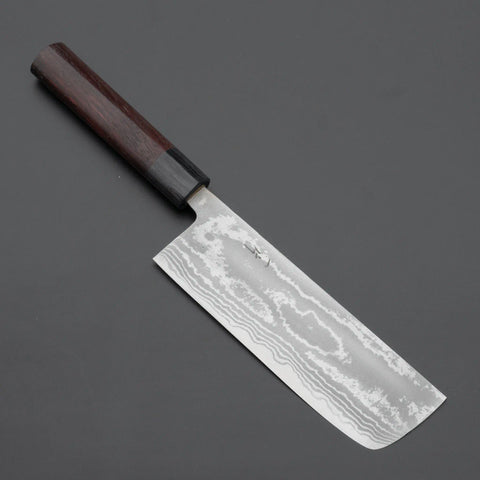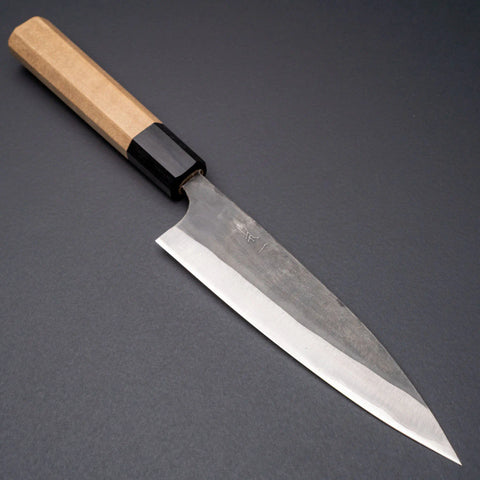
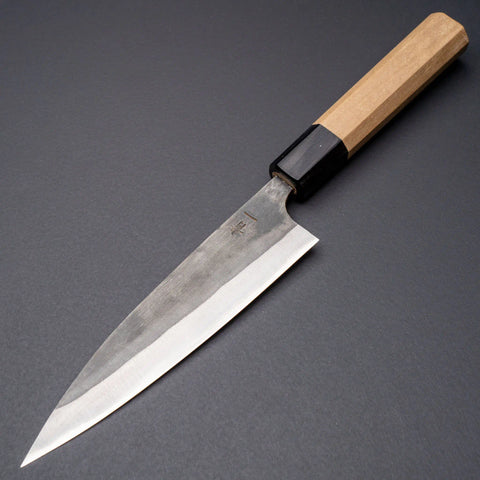
Ajikiri · Small fishing knife
Hitohira Hizen Kurouchi Blue #1 Stainless Clad Ajikiri
Hvorfor skal man betale for at få sin kniv slebet inden når man køber den? Ofte er knivene skarpe når vi modtager dem, men man kan virkelig løfte skarpheden til et andet niveau, hvis de lige får en tur på slibestenen inden de tages i brug.
Camellia oil (or tsubaki oil as it is also called) is used to protect your carbon knives from rust during storage. The oil is applied in a thin layer.
Description
Description
The knife is built with a hard core of Aogami #1, surrounded by a soft layer of stainless steel on each side.
The core of the knife in Aogami #1 (Blue#1), stands out for its purity and thereby ability to be sharpened extremely sharp. The knife edge is formed ultra fine and the thin profile of the blade ensures an extraordinary cutting ability.
Due to the purity of the steel, a relatively quick patination with use must also be expected. The beautiful blue patina gives the knife charm and character, but it also forms a protective film against further oxidation of the surface.
It is recommended that the knife be dried directly after use and the dishwasher is of course a no-go.
The steel is hard and it is therefore not recommended to cut hard objects such as cartilage, bones and frozen goods.
More about Carbon steel
Carbon steel is the classic Japanese knife steel. It can be hardened hard, can get a very sharp egg and is usually easy to grind up again. The most well-known types are Shirogami (white steel) and Aogami (blue steel).
Carbon steel contains little or no chromium, so it reacts with moisture and acid. The steel acquires a greyish to dark patina over time, and it can rust if it is left wet. Many of our carbon knives have a core of carbon steel in a sheath of stainless steel or soft iron. With a stainless shell, only the exposed core along the egg needs extra care. With an iron sheath, this applies to the entire blade.
Care & maintenance
Care & maintenance
Rinse and dry the knife thoroughly immediately after use, and never leave it in water. Never put it in the dishwasher. Wipe the blade when you are cutting, for example, citrus, tomato or onion. If the knife is to lie unused for a while, give the blade a thin layer of camellia oil. Patina is completely normal and not a defect. Use a wooden or plastic cutting board, not glass, stone or marble. Store the knife on a magnetic strip, in a knife block or in a saya so that the egg does not hit other things. Keep it sharp on a wet stone, and feel free to wipe it off on a leather strap in between.
Specifications
Detailed specifications
All measurements are taken on the actual blade — hand-forged knives vary slightly from piece to piece.
Butchering · Butcher Knife
Hitohira Hizen Kurouchi White #2 Butchering
Carbon steel · Ho Wood Handle · 145 mm
Ajikiri · Small fishing knife
Hitohira Hizen Kurouchi Blue #1 Stainless Clad Ajikiri
Carbon steel · Ho Wood Handle · 145 mm
Gyuto · Chef's knife
Hitohira Hizen Kurouchi Blue #1 Gyuto
Carbon steel · Walnut Shop · 180 mm
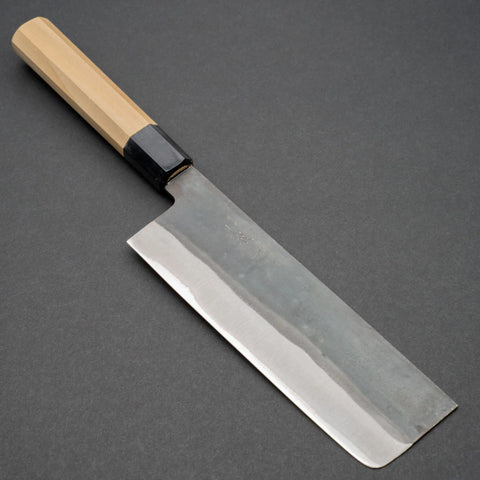
Nakiri · Vegetable knife
Hitohira Hizen Kurouchi Blue #1 Stainless Clad Nakiri
Carbon steel · Ho Wood Handle · 165 mm
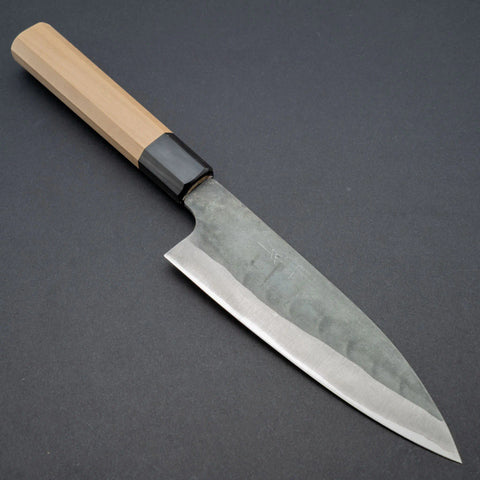
Gyuto · Chef's knife
Hitohira Hizen Kurouchi Blue #1 Stainless Clad Gyuto
Carbon steel · Ho Wood Handle · 155 mm
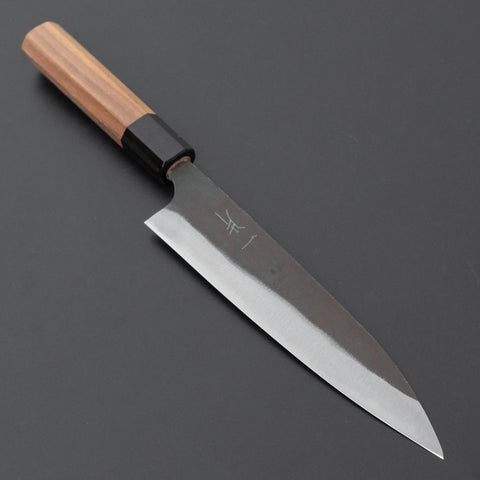
Petty · Universal knife
Hitohira Hizen Kurouchi Blue #1 Petty
Carbon steel · Walnut Shop · 170 mm
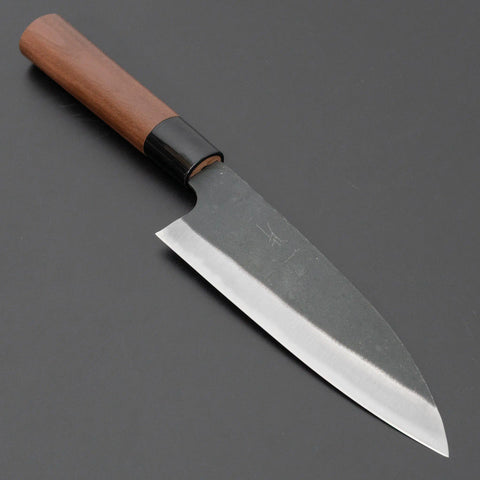
Gyuto · Chef's knife
Hitohira Hizen Kurouchi White #2 Gyuto
Carbon steel · Walnut Shop · 155 mm
Santoku · Allround knife
Hitohira Hizen Kurouchi White #2 Santoku
Carbon steel · Walnut Shop · 165 mm
Nakiri · Vegetable knife
Hitohira Hizen Kurouchi White #2 Nakiri
Carbon steel · Walnut Shop · 165 mm
Utility · Universal knife
Hitohira Hizen Kurouchi Blue #1 Utility
Carbon steel · Walnut Shop · 105 mm
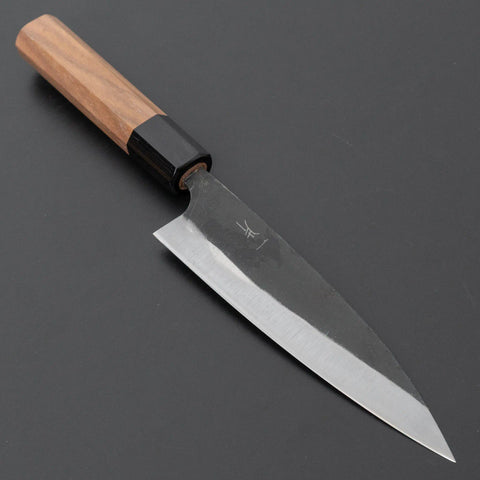
Ajikiri · Small fishing knife
Hitohira Hizen Kurouchi Blue #1 Ajikiri
Carbon steel · Walnut Shop · 145 mm
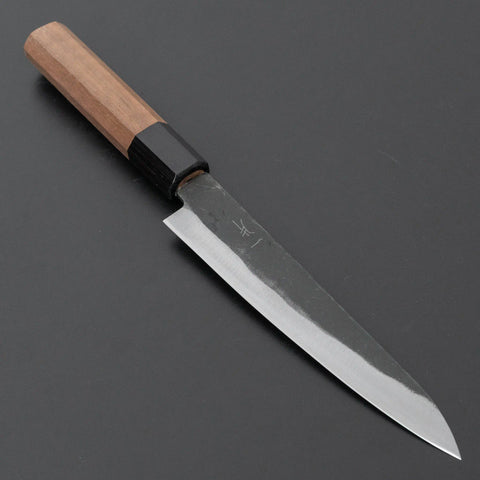
Petty · Universal knife
Hitohira Hizen Kurouchi Blue #1 Petty
Carbon steel · Walnut Shop · 150 mm